A Session of Quimbanda: A Beginner’s Guide
If you’ve just had a consultation of Quimbanda and are wondering where to begin, this document is meant to help you through this first crossroads.We’ve outlined everything you need to start your practice, including basic supplies needed, offerings, basic shrine set up and session outline.
A Session of Quimbanda: A Beginner’s Guide
Beginning a Relationship with your Exu & Pombagira
written by Jesse Hathaway Diaz, Tata Apokan Kilombe wa Lwenzi
Salve! This guide offers a place to begin your practice following a consultation to determine which Exu and Pombagira walk with you. With their names comes an invitation to become acquainted: to learn their likes, dislikes, and affinities, and the pontos riscados and pontos cantados that call them and stir their particular força. While devotional sessions may also honor Exu and Pombagira more broadly, the guidance here will help you begin nourishing these individual relationships as named in your consultation.
A session is the time set aside and the ritual performed for and with the spirits. A firmeza consists of physical objects gathered through resonance and sympathy with the spirits, then empowered through the session. A tronco is the shrine that houses your statues, firmezas, and assentamentos. Each has a distinct role and ritual protocol, though technologies and terminology vary by house.
Bring your questions, your concerns, your gratitude, and the ordinary events of your life. There is room to ask for what you need, to speak of what you desire, and simply to enjoy their company. Ten or fifteen minutes each week is enough to begin. Familiarity develops through returning: learning their songs, attending to their preferences, and observing how the relationship takes shape in your life. Good-quality materials can strengthen the practice, but it is time and sustained attention that allow the relationship to take root.
Begin with a practice you can comfortably maintain. A clean place, a candle, simple offerings, and the guidance received in your consultation provide a foundation from which to grow. What follows offers a simple structure for preparing that place and spending time with Exu and Pombagira.
Preparing the Space
Establish a clean, quiet place where you can speak freely and remain undisturbed. A washable floor, sturdy tray, or removable board or tile may hold a temporary arrangement. Terracotta saucers and slate cheese plates are practical, attractive choices. A sheltered outdoor space is also suitable where you have permission to practice. Attend to privacy, weather, fire, and others who share the place.
You can begin simply, keeping a small set of ritual items to bring out when you spend time with your spirits—usually once or twice a week. After your session, you can take down the temporary shrine and store your items until next time. You can also offer your spirits a more permanent place in your home. In either case, choose a spot away from heavy household traffic, preferably where a distinct area can be sectioned off, and ideally outside bedrooms and bathrooms. A small table or a cabinet screened with a curtain can make a welcoming, dedicated space.
Different houses and lineages approach this differently, and some teach that Exu should not be cultivated indoors. In Quimbanda de Angola, we encourage you to grow familiar with your spirits at home. One purpose of divination is to confirm that these spirits are compatible with you and that welcoming them into your home is appropriate, so you can begin building the relationship with confidence and care.
As your shrine and firmezas become more complex, we can revisit where they will be best situated and tended over time. For now, there is no need to worry about those later arrangements; begin with a simple space you can care for comfortably, and let the relationship grow.
Materials
Keep the names and pontos riscados supplied with your consultation nearby. Have chalk, a candle in a secure holder, and clean offering glasses ready. Ordinary chalk is fine for your first sessions; you can use pemba (ritual chalk for drawing pontos) when available. Either way, keep the drawings temporary. Follow the guidance from your reading on candle colors and other materials.
Alcohol, tobacco, flowers, fruit, or a basic padê (a prepared offering—more about that later) may accompany the session according to your spirits' preferences. Begin with what you understand and can maintain consistently. Lit candles and fresh water are sufficient as an initial offering. The presentation of alcohol or tobacco does not require personal consumption.
Timing
Mondays and Fridays are the most traditional days for sessions, and Saturdays are also common, but ultimately any day will work. Each day has its resonances with different kingdoms and energies. A regular rhythm helps; begin with the time you can give. Sessions generally take place after dark—our nighttime is their daytime—and familiarity will help you learn when your spirits prefer to be called. Better a candle lit at noon on a Wednesday than one left unlit while you wait for a free Friday night.
A Basic Session of Quimbanda
Fire and water, alcohol and tobacco, the drawn point and the sung point, are central to the session. The candle and the offering of water establish a basic material presence; alcohol and tobacco nourish and honor the spirits; the ponto riscado—the drawn point—gives the encounter a particular form, while the ponto cantado—the sung point—calls, praises, and animates it through breath and voice. Attend to these elements with care. Their simplicity permits a substantial practice without an elaborate collection of materials.
Bakulu — Attending to the Ancestors
Before turning to the session itself, we begin with the ancestors. This may be a separate observance or part of an existing devotional practice, rather than something repeated in full each time you greet Exu and Pombagira.
Attend first to Bakulu, the ancestors. Their remembrance acknowledges the lives and relationships through which our own lives became possible. If you already tend regularly to the dead in another manner or tradition, let that care continue to nourish you here. Especially as you begin, there is no need to take on more practices; what matters is tending the relationships with your ancestors that will help sustain you as Quimbanda takes root in your life.
If you are just beginning to tend to your ancestors, or would like to approach them through a Quimbanda de Angola framework, begin simply. Prepare a candle (usually black and white, or solid white) and a clear glass of fresh water. You might offer a little bread or food as well. Greet the ancestors of blood, affection, profession, and spiritual kinship as appropriate to your practice. Speak to them, offer your remembrance, and ask for their help in finding steadiness, peace, and good paths. There will be time to learn traditional offerings; for now, offer what you can with sincerity and care.
“Ancient elders, receive this light, water, and remembrance. May you be at peace. Help me to be steady, capable, and strong, and to honor the life entrusted to me.”
This stabilization may take many forms, including practices already familiar to you. Regular ancestral remembrance and care support the effectiveness and sustainability of our Quimbanda. For this reason, we begin with this ancestral foundation before turning our attention to Exu and Pombagira.
Risca Ponto — Drawing the Points
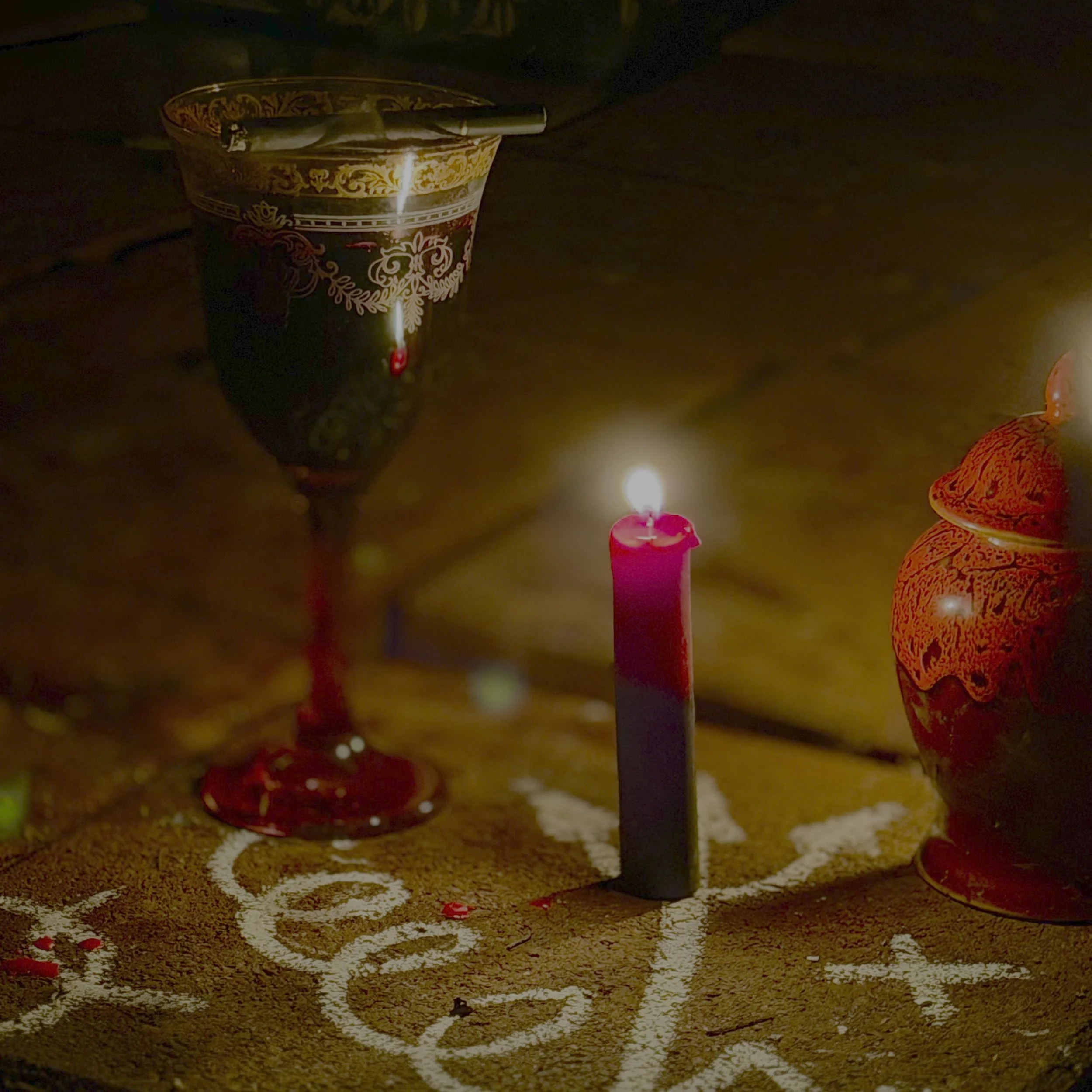
Clean the surface and wash your hands. Draw the pontos riscados of your Exu and Pombagira in regular chalk or pemba (ritual chalk for drawing pontos) when available. Each ponto identifies a particular spirit and establishes a place where offerings may be received. Its circle does not confine the spirit. If you have not had divination to determine your specific Exu and Pombagira, seek guidance before adopting a drawing from another source. Optional incense may prepare the space or be offered but is not mandatory; understand its purpose and omit it where smoke is unsuitable.
Arrange the offerings securely in relation to the points, with Exu on the right and Pombagira on the left as you face them.
Abertura e Saudação — Opening and Greeting
Light a candle–black and red (or solid black) for Exu, black and red (or solid red) for Pombagira– on each point. Offer drops of water onto the working surface and the ground. Begin with the following salutations, greeting your spirits by name:
Salve o povo de Quimbanda. — Hail the people of Quimbanda.
Salve o Maioral. — Hail the Highest Chief.
Salve Rei, Salve Rainha. — Hail King, Hail Queen.
Salve os Sete Reinos de Exu. — Hail the Seven Kingdoms of Exu.
Salve o povo da Rua. — Hail the People of the Street.
Salve Exu [name]. — Hail Exu [name].
Salve Pombagira [name]. — Hail Pombagira [name].
Name what you are offering: “I offer you this light. I offer you this water.” Present any additional offerings with the same clarity. A greeting need not be elaborate to be attentive and sincere.
Oferendas — Water, Alcohol, Tobacco, and Food
Offer alcohol to your spirits according to the preferences of each particular Exu or Pombagira. A small measure is sufficient for an initial session.
Present a cigarette, cigar, or tobacco in a suitable dish or ashtray. It may remain unlit. If you light it, tend it throughout and be aware of where ash and embers fall. Keep alcohol away from candles, charcoal, and burning tobacco; take care not to pour or spray it onto fire.
Alcohol and tobacco may also be shared in communion with your spirits, though personal consumption is never required. Alcohol can soften some of the boundaries around spirit communication, and tobacco may bring its own sensations, but neither intoxication nor the rush of nicotine should be mistaken for spiritual contact. The aim is to remain attentive, present, and capable of engaging with your spirits, not to become inebriated. A session is not an excuse to overindulge.
Begin with small, basic offerings, and learn their meanings before introducing greater complexity or changing too many elements at once.
Canta Ponto — Song and Conversation
Sing a ponto cantado for each of your spirits, consulting notes or recordings as needed. Start with any songs provided during your consultation, or explore the many recordings available online, including on YouTube. More general pontos for Exu and Pombagira are perfectly suitable until you find ones appropriate to your particular spirits. Learn the words, their meaning, and the melody as you go, but don't wait until you've mastered a song to begin singing it. Each session is an opportunity to practice, and singing is itself part of how we engage with the spirits. Then speak openly about your week, desires, concerns, and the changes you seek. Ask for assistance, give thanks, and allow time for communion.
Comunhão e Incorporação – Communion and Incorporation
Communion with the spirits can take many forms, of which incorporation is one. Communion is essential to our practice, but it does not require possession. Through attention and familiarity, we learn to recognize and converse with the spirits, experiencing their presence through impressions, dreams, bodily awareness, or a growing understanding of their influence in our lives.
Incorporation has an established place within the cult, where spirits come to counsel, prescribe workings, and perform its rites. It develops through training, observation, and confirmation within a house. These beginning sessions emphasize awareness and relationship; possession should not be deliberately pursued, particularly when practicing alone.
Allow periods of quiet. Impressions may arise during the session or become apparent later through dreams, reflection, or ordinary activity. An uneventful session remains time given to the relationship; there is no need to demand a particular experience.
Distinguishing spiritual contact from expectation, emotion, and personal interpretation requires time and discernment. Divination, trained mediumship, and experienced guidance help us evaluate impressions, particularly before acting upon consequential advice. Personal contact does not confer priestly authority or qualify a beginner to interpret messages, prescribe workings, or speak on behalf of the spirits for others.
Exu and Pombagira are independent spirits whose perspectives may challenge our preferences and assumptions. Neither agreement nor contradiction alone confirms their presence. The relationship requires a continuing negotiation of space, desire, awareness, and responsibility, sustained by regular attention and care. Allow room to listen, question, and seek confirmation.
If sessions repeatedly lead to involuntary altered states, gaps in memory, or difficulty returning to ordinary activity, pause the practice and seek guidance before continuing. Persistent distress, disorientation, or disruption to daily life also warrants appropriate professional support. The practice should develop at a pace that allows you to remain grounded, attentive, and capable of tending both the encounter and its conclusion.
Despedida e Encerramento — Farewell and Closing
Offer sincere thanks, acknowledge each spirit by name, and clearly conclude the session. The following farewell may be used:
Obrigado/a, povo de Quimbanda. Boa noite. — Thank you, people of Quimbanda. Good night.
Salve Exu. Salve Pombagira. Laroyé! — Hail Exu. Hail Pombagira. Laroyé!
Use obrigado or obrigada as appropriate to the speaker’s gender.
It is traditional to allow candles offered to the spirits to burn down fully, but this expectation should never take precedence over safety. Allow them to continue burning only while you can remain present and attend to them. Use stable, heatproof holders in a well-ventilated space, keeping flames and offerings beyond the reach of children and animals, with sufficient clearance above and around the flames.
Clear the temporary arrangement according to the guidance you have received, retaining reusable vessels, holders, and drawing surfaces. Offerings may be removed after the candles have finished, before the next session, or at an appropriate time between the two. Attend to their condition: food and liquids should be cleared before they spoil or attract pests.
Before returning to ordinary activity, consider washing your hands and face thoroughly. A regular bath or shower may be sufficient to refresh the body and mark the conclusion of the encounter; stronger clearing baths may be used where appropriate. Keep brief notes on the session, including any impressions or questions you wish to revisit or bring for further guidance.
Entrando nos Reinos — Meeting Your Spirits in the Kingdoms
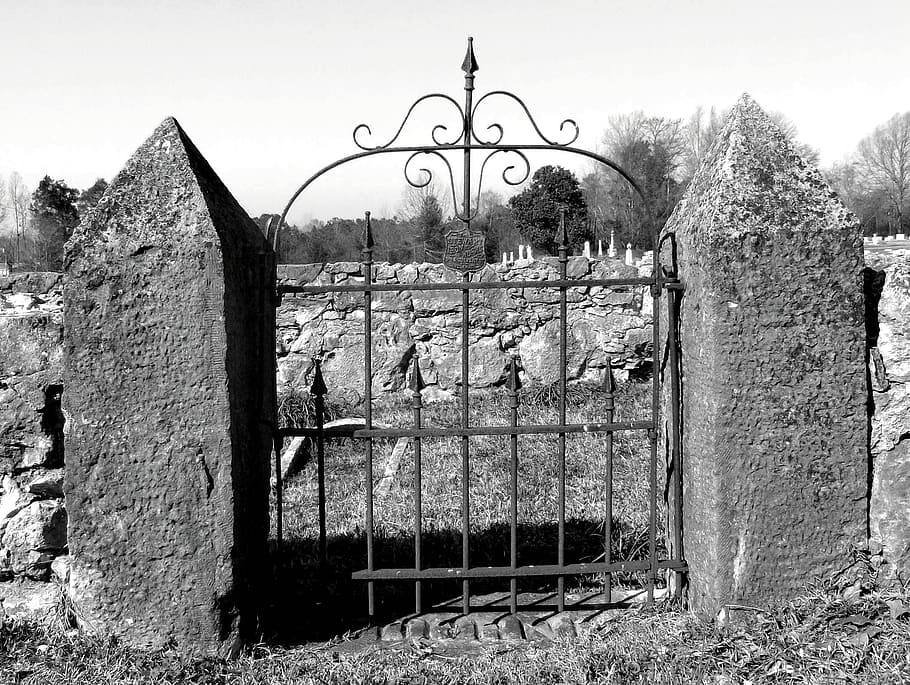
The relationship also develops through encounters in the kingdoms, in the places where your spirits live and work. Your consultation may offer guidance about where to visit, and as your relationships grow, you may find yourself drawn to particular places. A crossroads, a bar, a cemetery, a wooded path, or the banks of a river may offer opportunities to spend time in their company. When entering a kingdom, it is customary to greet its King and Queen before calling upon your own spirits, even when you do not know them by name. A simple “Salve Rei! Salve Rainha! Salve Exu! Salve Pombagira!” is sufficient to acknowledge those who preside over the place. Then greet your spirits, present a modest offering where appropriate, and take some time to be with them.A cigarette or cigar, a little alcohol, and a salutation or song may be sufficient.
In a suitable music venue, an additional drink might be dedicated to a spirit while you continue to converse and enjoy the music. For a cemetery visit, learn the entrance greeting and offering first, respect opening hours and mourners, and go to the place indicated for your spirits: perhaps a tree, crossroads, or the Cruzeiro. In the woods or other natural places, you might spend time beneath a particular tree or beside a stream, offering a little water, a song, or simply your attention. Ask permission before making offerings on someone else's grave or monument, and be mindful of the people, animals, and other beings who share these places.
Wherever you go, take care with what you bring and what you leave behind. Remove containers, cigarette remains, and other litter, and avoid introducing foreign objects or materials that might harm the land or its inhabitants. Even biodegradable offerings are not necessarily appropriate to leave behind. These places are already home to others, whether human, animal, or spirit. Visit with respect, leave them well tended, and remember that cultivating relationships with the kingdoms also means learning to be a good neighbor to the seen and the unseen.
A Few Simple Recipes for Beginning Your Practice
The simple padês, baths, and fumigations offered here provide an accessible starting point for approaching a session and establishing a practice. They should be understood alongside the particular teachings of house and lineage, whose specific preparations, purposes, and methods are learned through further guidance and training. As your knowledge and relationships deepen, your practice will develop with them.
Where possible, learn to prepare the basics yourself. Handling the materials, learning their qualities, and preparing them with prayer and song develops familiarity with the vocabularies and technologies of the practice. This knowledge will also help you understand and work more attentively with preparations made by others.
Traditional formulas and prepared offerings are available for purchase through The Pact, including more complex compositions incorporating harder-to-find ingredients, as your interests, needs, and budget permit. Do not mistake complexity for effectiveness, or simplicity for the final form: begin with what you understand, attend to it carefully, and allow the practice room to grow.
Padê- Offering and a Language of Request
A padê is more than an offering of food–it is a coded request whose ingredients carry particular functions within the cult. Follow the preparation recommended for your spirits and learn its composition before adapting it. The following quantities provide modest portions for a session.
Padê Básico para Exu — Basic Padê for Exu
Ingredients: ½ cup food-grade toasted cassava flour (farinha de mandioca) or cornmeal, 1–2 tablespoons dendê (red palm oil), a few red-onion rings, seven small red chilis, seven cowries or coins. Add the oil gradually, using the finished texture as a guide.
If using untoasted flour, toast the flour gently in a dry pan until fragrant, stirring without burning it. Remove from heat. Fold in dendê a little at a time until the mixture is orange and resembles damp sand, rather than a paste. Place in a clean offering bowl and decorate with onion, chilis, cowries or coins. Let it cool. Place it at Exu’s ponto, greet him by name, and present the offering with song. Tobacco and a separate measure of his drink may accompany it as instructed.
Padê Básico para Pombagira — Basic Padê for Pombagira
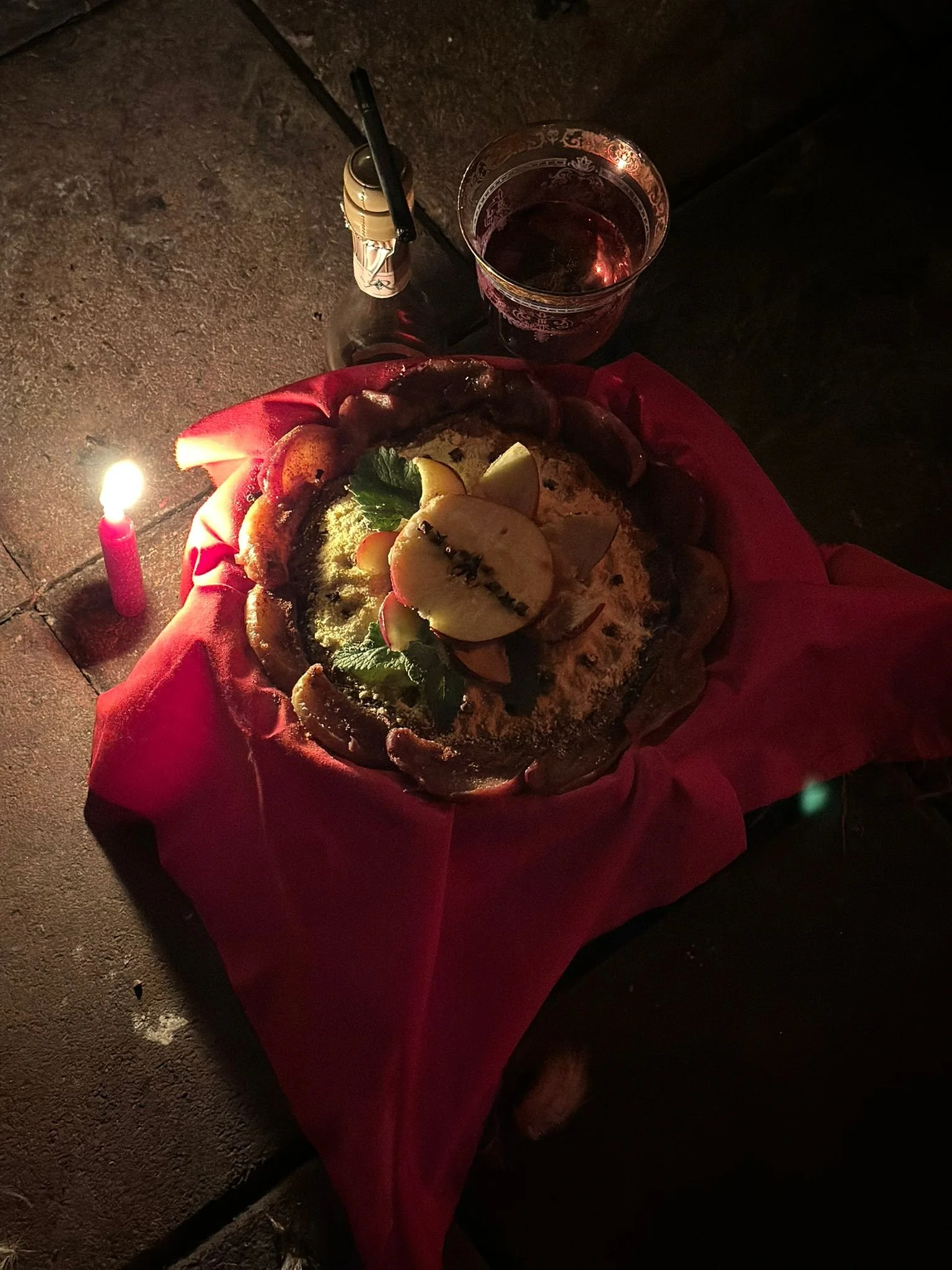
Ingredients: ½ cup food-grade toasted cassava flour or cornmeal, 2–4 tablespoons cider or sparkling wine, 1 teaspoon honey, a few apple slices, cinnamon sticks, seven cowries or coins.
If using untoasted flour, toast it first and allow it to cool completely. Away from heat or flame, mix in the drink gradually until the flour resembles damp sand. Arrange in an offering bowl, decorate with apple and cinnamon, and drizzle with honey. Present at her ponto with greeting and song. Roses, coins, and a cigarette may accompany it as instructed. These are simple starting offerings; your spirits’ particular preferences come first.
Bebidas e Fumo — Alcohol and Tobacco
Exu: cachaça, whiskey, and other spirits specified in the reading; cigars, pipes, cigarillos, and sometimes cigarettes.
Pombagira: sparkling wine, champagne, cider, or anisette; cigarettes, cigarillos, and, where appropriate, menthol or clove varieties.
These are common options in our experience, not fixed rules for every spirit. Tobacco can remain unlit. Offer water when alcohol is unsuitable. All offerings participate in a coded language of request and petition, and simple fruits provide an accessible place to begin. Consider whether an offering is heating or cooling, drying or sweetening, while allowing sincerity to guide the gesture: offer from the heart, with less need to reason through every detail.
Banhos e Defumações- Baths and Incenses
Here we offer several introductory baths and incenses for preparing a session, supporting particular intentions, and returning to ordinary activity afterward. Where two versions are given, one draws on Brazilian herbal suppliers, while the other emphasizes familiar culinary herbs and more widely available materials.
Follow the particular recommendations received for your spirits. There is no need to use every preparation during a session. Baths and incense support the encounter; they do not take its place. Use them with understanding and purpose, remembering that the foundation remains the time you spend with your spirits.
For the baths: Use fresh, clean, correctly identified herbs and, where indicated, fresh flowers. Bruise and macerate the herbs between your hands in cold or comfortably cool water while praying or singing to the spirits. Do not boil or steep these preparations. Where roses are included, use fresh, unsprayed petals. Strain thoroughly and prepare immediately before use.
After an ordinary shower, pour gently from the shoulders down, avoiding the face, intimate areas, and broken skin. These are external washes, not drinks. Omit ingredients to which you are sensitive, and rinse with plain water if irritation occurs. Do not replace leaves or flowers with essential oils.
For incense: Use thoroughly dried ingredients, measured by volume. Crumble leaves and crush resins or other ingredients sufficiently to mix them. Use a small pinch on a suitable incense heater or prepared incense charcoal in a heatproof censer. Ventilate, attend the burner, and keep it away from alcohol and combustible materials. Gentle heat is particularly important for leaf mixtures. Smoke may be omitted where unsuitable.
A Note on the Formulas: Although the traditional and accessible recipes may share some ingredients, each is a complete formula. Choose one version and follow it as given, rather than combining the two or substituting ingredients between them.
Banho de Preparação — Bath for Receptivity, Steadiness and Attention
Traditional Ingredients: Alfavaca-cravo (Ocimum gratissimum), Pitanga (Eugenia uniflora), Goiabeira (Psidium guajava), petals of Rosa Vermelha (Rosa spp.), a crumbled cigar, and a pinch of sulphur
Accessible Version: Basil (Ocimum basilicum), Lemon Balm (Melissa officinalis), Rosemary (Salvia rosmarinus), a crumbled cigar, Red Rose petals (Rosa spp.), and a pinch of sulphur.
Defumação da Sessão — Incense for the Quimbanda Session
Traditional Ingredients: Benjoim (Styrax spp.), Alecrim (Salvia rosmarinus), Manjericão (Ocimum basilicum), Alfazema (Lavandula spp.), Mirra (Commiphora spp.), and a crumbled cigar.
Accessible Version: Benzoin (Styrax spp.), Rosemary (Salvia rosmarinus), Basil (Ocimum basilicum), Lavender (Lavandula spp.), Myrrh (Commiphora spp.), and a crumbled cigar,
Banho de Exu — Bath for Movement, Open Roads, and Agency
Traditional Ingredients: Samambaia (Phlebodium decumanum), Alevante (Mentha spicata), Alecrim (Salvia rosmarinus), Manjericão (Ocimum basilicum), and a crumbled cigar, with cachaça or beer added
Accessible Version: Peppermint (Mentha × piperita), Marjoram (Origanum majorana), Rosemary (Salvia rosmarinus), Basil (Ocimum basilicum), and a crumbled cigar, with cachaça or beer added
Defumação de Exu — Incense for Movement and Opportunity
Traditional Ingredients: Benjoim (Styrax spp.), Gengibre (Zingiber officinale), Alecrim (Salvia rosmarinus), Manjericão (Ocimum basilicum), and Louro (Laurus nobilis)
Accessible Version: Benzoin (Styrax spp.), Ginger (Zingiber officinale), Rosemary (Salvia rosmarinus), Basil (Ocimum basilicum), and Bay Laurel (Laurus nobilis).
Banho de Pombagira — Bath for Presence, Attraction, and the Fulfilment of Desire
Traditional Ingredients: Petals of Rosa Vermelha (Rosa spp.), Manjericão (Ocimum basilicum), Hortelã (Mentha spicata), Pitanga (Eugenia uniflora), cider or sparkling wine, and honey
Accessible Version: Red Rose petals (Rosa spp.), Basil (Ocimum basilicum), Spearmint (Mentha spicata), Marjoram (Origanum majorana), cider or sparkling wine, and honey
Defumação de Pombagira — Incense for Attraction and Recognition
Traditional Ingredients: Benjoim (Styrax spp.), petals of rosa vermelha (Rosa spp.), Dama-da-noite (Cestrum nocturnum), Canela (Cinnamomum verum), Cravo-da-Índia (Syzygium aromaticum), and Louro (Laurus nobilis)
Accessible Version: Benzoin (Styrax spp.), Red Rose petals (Rosa spp.), Jasmine (Jasminum sambac), Cinnamon (Cinnamomum verum), Clove (Syzygium aromaticum), and Bay Laurel (Laurus nobilis).
Banho Após a Sessão — Bath for Cooling and Returning after a Session
Traditional Ingredients: Boldo (Plectranthus barbatus), Alecrim (Salvia rosmarinus), Hortelã (Mentha spicata), Erva-cidreira-brasileira (Lippia alba), Espinafre (Spinacia oleracea), and Odundun (Kalanchoe crenata).
Accessible Version: Thyme (Thymus vulgaris), Rosemary (Salvia rosmarinus), Spinach leaves (Spinacia oleracea), Lemon Balm (Melissa officinalis), Spearmint (Mentha spicata), and Kalanchoe (Kalanchoe crenata).
Continuing Your Practice
Give the relationship time, and observe how it develops. A personal practice offers an opportunity to become acquainted with your spirits and to discover how Quimbanda takes root in your life. This relationship may be cultivated through independent devotion and occasional guidance, whether or not formal initiation is eventually sought.
There is a Brazilian expression: Don’t waste a good candle on a bad saint. The same applies to the devil! If your practice seems unproductive, seek guidance before increasing the complexity or expense of its offerings. Through The Pact, I offer classes for non-initiates on the foundations of Quimbanda, establishing a personal practice, and more. Visit The Pact for current offerings and announcements.
There is a Brazilian expression: Don't waste a good candle on a bad saint. The same applies to the devil! If your practice seems unproductive, seek guidance before increasing the complexity or expense of its offerings. For those wishing to deepen their studies, The Pact offers classes on thefoundations of Quimbanda, establishing a personal practice, and other aspects of the tradition. Divination and mentorship are always available.
About the Temple
Cabula Mavile Kitula kia Njila is a Quimbanda de Raíz Temple in the Hudson Valley, New York, under the guidance of Tata Apokan, Jesse Hathaway Diaz. Our community cultivates practical training, reciprocity, and service within our Quimbanda de Angola lineage. We honor the Brazilian inheritance of Quimbanda while attending to the land and spirits where we practice. Agency, respect, discretion, and responsibility inform the life of our Cabula.
Quimbanda is an initiatory tradition, whose fuller transmission develops through relationships with elders, spirits, lineage, and community. The beginning practices offered here allow you to explore your relationship with Exu and Pombagira and consider whether this path calls for further commitment. They also provide a foundation for meaningful personal devotion outside formal membership in a Temple.
A consultation with our Temple begins an acquaintance; it carries no expectation of initiation or community membership. Finding a house is a process of mutual recognition, through which both the individual and the community discover whether their values, expectations, and ways of working are compatible. A fruitful relationship with Quimbanda may lead someone toward our Cabula, toward another house, or toward continued independent practice.
If you feel drawn to know our community more closely, we welcome you to reach out, ask questions, and inquire about opportunities to visit. Take time to meet the people, become familiar with our practice, and consider what participation would mean. You can subscribe to our newsletter at the bottom of this page for announcements about classes, gatherings, and open events, or reach out by email if you'd like to learn more.
Tem caminho…
Begin with what you can offer sincerely, and allow the relationship time to take root. Return with patience, curiosity, and attention to how the practice meets your daily life; there is much to learn through a simple session, faithfully repeated. May Exu and Pombagira open good roads before you, and may you find the discernment and courage to walk them.
Laroyé Exu! Salve Pombagira! Salve o bom povo de Quimbanda!